Global OPS TechChangeTechChange is proud to be working with Global OPS, a platform for global peacebuilding, to provide real-time, customized assistance and professional development training for policy makers and peacebuilding practitioners working on the ground globally for peacebuilding, conflict prevention, and post-war recovery.

Using TechChange’s interactive e-learning platform, Global OPS will offer tailored support and training facilitation for UN experts and agencies, senior diplomats, government officials, peace practitioners, inter-governmental organisations staff, ministry staff and local authorities, and international organisations. These communities of practice will be forums to exchange lessons learned and timely knowledge on peacebuilding, prevention, crisis management, post-war recovery and stabilisation, and mediation and support for peace processes across the world.

To address key needs for peacebuilding, mediation and peace processes, conflict prevention, and post-war recovery, Global OPS modules have been developed to benefit peacebuilding practitioners based on extensive consultation with missions, agencies, organisations and governments in the field. Module facilitators are selected among a highly competitive pool of leading professionals with proven on-the-ground knowledge, expertise, and experience.

The first  two modules of Global OPS begin in a pilot phase on November 20th 2013:

  1. Early Warning, Early Response and Contemporary Peace Operations (12 weeks)
  2. Putting Theory into Practice: The link from Project Cycle to Evaluation, Design and Implementation (5 weeks)

A further launch of 9 modules will take place in March 2014 in the first full semester of Global OPS.

For more information on these courses, please visit http://globalopsonline.org/global-ops-modules/.

About Global OPS

Global OPS is a joint programme of the Department of Peace Operations and the International Peace and Development Training Centre (IPDTC) of PATRIR. It has been created to meet a critical need in the peacebuilding and global crisis and conflict management community to provide high quality customised support for agencies, experts, practitioners and policy-makers in the field through real-time, targeted and customised assistance.

You can check out the Global Ops website at  www.globalopsonline.org.

If your organization is interested engaging employees with interactive and customized online training, please contact TechChange at info [at] techchange [dot] org.


One of the most difficult things as an entrepreneur is transitioning from a single person with an idea to a team of colleagues with a shared creative vision. Such a transition involves trust, time, and a certain degree of terror. But finding these fellow travelers who bring new skills, perspectives, and outlooks to bear on the original idea is without question the key to everything.

Over the past three years at TechChange, I’ve had the privilege working with hundreds of inspiring individuals: staff, advisory board members, and partners. Given the incessant pace of start-up life, it is sometimes easy to neglect the distance already traveled, the road already taken. Today, I’d like to to reflect on that journey and the contributions of one amazing individual: Chris Neu.

I first met Chris in the spring of 2010 while he was still working at the US Institute of Peace (USIP). I got a call from Dominic, my colleague and co-founder, saying “Chris Neu one of the smartest people I’ve ever met – he’s interested in coming over to work with us.” I remember thinking to myself, “One of the smartest people – huh? We’ll see.”

Three years later, I can confirm that Dominic was right.

Chris Neu is a firestorm of creativity, intelligence, and hard work. He is hardwired for start-up culture and possesses a rare unbridled energy for everything he does. He is the chief operations officer, the chief of staff, the photographer, the bookkeeper, the proposal writer, the facilitator, the blogger, the project manager, and so much more.  He wears a TechChange t-shirt to every event and can be found enthusiastically sharing our story and message late into the night. And while he’s a frequent contributor to the many hilarious conversations that emerge in our tiny 3rd floor loft, he’s not afraid to take the hard line or unpopular stance in the interest of keeping the organization on track. He’s also the one hassling to me write more blog posts, so here you go, Chris!

Every leadership team is different but I believe the successful ones have people with complementary skill sets and fundamentally different personalities at the helm. To those sitting on great idea, I can confidently say: find someone who challenges you and disagrees with you, someone who pushes you to work harder and do more. Chris Neu is that person for me.

While in some sense the journey for TechChange is still just beginning, so much of our current success is a direct consequence of Chris’s tireless efforts over the past three years.

So today please join me in saying: Happy Birthday Mr. Neu and thank you for all you do for TechChange!

(Stay tuned as a I profile other staff members in weeks to come. Next up: Will Chester)

TechChange Hope Phones donation mHealthWhat if your old phone could help improve the health of populations in developing nations? Did you know that 500,000 cell phones are discarded in the United States every day?

TechChange is donating phones to empower global health practitioners in developing countries via Medic Mobile’s Hope Phones mobile donation program. The program’s goal is to responsibly reduce hazardous waste from mobile electronics while simultaneously promoting public health in developing countries.

When Nick Martin and Medic Mobile’s president, Josh Nesbit, last met during PopTech 2013, they  instantly connected over their common interest in mHealth. Although the number of mobile phones and mobile subscriptions are increasing worldwide, there is still a significant need to empower global community health workers with these tools to promote better health for more people. According to the Medic Mobile, “If we can recycle just 1% of disposed phones each year, we can outfit 1 million health workers, improving the lives of 50 million people.”

There is also a need to learn the latest best practices and innovations in mHealth. Learn how you can donate your phone here and join us in our upcoming mHealth online course with the mHealth Alliance! This course regularly attracts an exciting global community of doctors, public health practitioners, mobile service providers, health research specialists, and others to learn how mobile technology can address HIV, tuberculosis, maternal health, vaccinations, and improve healthcare delivery. Hope to see you in the course!

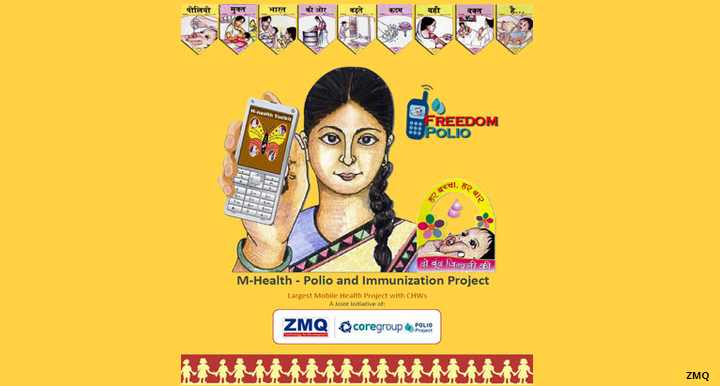
Freedom Polio India mHealth programWe’re excited to be mentioned in the New York Times in an article on mobile technology for social good!

The article, titled “Ubiquitous Across Globe, Cellphones Have Become Tool for Doing Good”, discusses how mobile phones are becoming more useful beyond entertainment in developing countries and emerging markets. Increasingly, organizations are using SMS text messages to provide goods and services including water, energy, financial services, healthcare, and education.

Here’s an excerpt from the article:

The number of [mobile public-private partnerships] seems likely to increase. “The development community is eager to learn more about how to use mobiles effectively,” said Nick Martin, a founder of TechChange, a social enterprise based in Washington that educates development practitioners via online courses.

Mr. Martin said his most popular course has been Mobiles for Development. In the last three years, TechChange has taught the course eight times to nearly 400 participants from over 60 countries.

MHealth, or mobiles used for health services, is the most “evolved” of the mobile sectors, Mr. Martin said. Large-scale campaigns in mHealth have focused primarily on maternal health and vaccination campaigns.

Check out the entire article in the New York Times here.


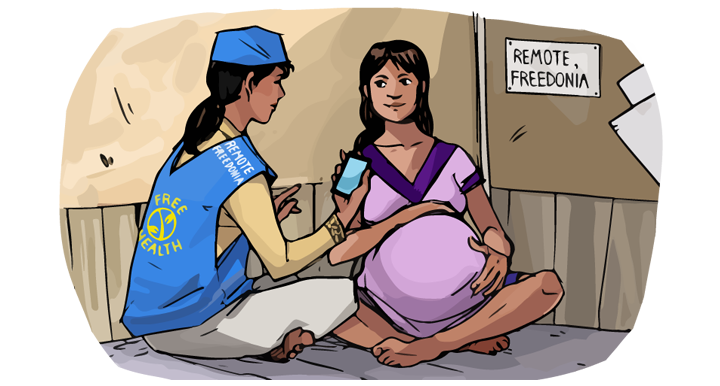
Pre-natal education for new mothers via mobile phones

Mobile phones are more than just communications devices; they are also powerful tools to improve health care. Since 2012, TechChange and the mHealth Alliance have offered a four-week online certificate course in mHealth: Mobile Phones for Public Health.

Our mHealth course has brought together an incredible group of roughly 100 doctors, community health workers, academic researchers, IT administrators, and government officials from over 35 countries to share knowledge. Each time we do the course, we’ve been amazed at how mHealth has advanced global health.

Here are the three key mobile innovations changing the delivery of health care services that we’ll cover in our next course, which starts on November 18th.

1. Text Messages for Pregnant Mothers

Nearly 800 women die of childbirth or pregnancy-related complications every day, and 2.9 million newborn deaths occur every year. At the same time, at least 1 billion women in low- and middle-income countries own mobile phones, providing a promising opportunity to use mobile phones to improve maternal and child health. On Mother’s Day 2011, former U.S. Secretary of State Hillary Clinton launched the Mobile Alliance for Maternal Action (MAMA), a public-private partnership between USAID, Johnson & Johnson, the mHealth Alliance, the United Nations Foundation, and BabyCenter.

MAMA message templates can be downloaded for free, which means any organization can take advantage of this content to prepare pregnant mothers for childbirth. In our online course, we’ll learn how to customize these messages for different contexts and help participants determine what technical platforms are best for delivering these messages. SMS technical platforms we plan to feature include FrontlineSMS, Telerivit, Voto Mobile, EngageSpark, and Textit.

2. Support for Community Health Workers

recent report by Dalberg found that Sub-Saharan Africa will need to train more than 1 million additional community health workers to keep up with health care demands. Medic Mobile and Last Mile Health are two organizations working to provide training to community health care workers in countries like Liberia and Malawi. They have teamed up to create a mobile network for a district in Liberia and to design a mobile application that will dramatically improve community health care worker training and management. This mobile app will also improve community health care worker communication with clinicians based in health facilities. The mobile platform will also include automatic data collection and a reporting system that will create stronger, more efficient systems to manage patient records and monitor data quality.

Learn about how these organizations are using mobile technology to provide training for community health care workers and what other technologies and strategies organizations can use to provide similar support to marginalized populations. As part of the mHealth course, we’ll feature workshops with some of the leading software platforms for data collection and patient management, including  CommCare and Magpi.

3. Moving Beyond the Pilot Phase

In recent years, a great deal of mHealth projects have entered the pilot phase, but few have gone on to reach scale. Among those that have scaled are Ureport, an SMS-based civic engagement platform based in Kenya, and Project Mwana in Zambia, which works to increase the testing and treatment of infants born with HIV. These projects show that with adequate preparation and when designing with scale in mind, it is possible to move beyond the pilot stage and increase the reach of mHealth programs.

However, sometimes barriers to scale can come from funders’ reluctance to support scaling programs rather than funding new and innovative ones. In our online mHealth course, we will look at strategies to get beyond scale, including human-centered design, working with funders, and learning from past mistakes.


We hope you decide to join us and meet all kinds of professionals from around the world working in the field of mHealth. Don’t miss out on what will be a great course!

Join this global mHealth learning community by signing up for the course today.

On Friday, Nov. 1, TechChange was honored to participate in a panel at the latest Tech@State  conference on education technology, as well as sponsor the informal reception afterwards to celebrate ten years of e-diplomacy. We wanted to share a few thoughts below of the day to continue the conversation online!


P1080658

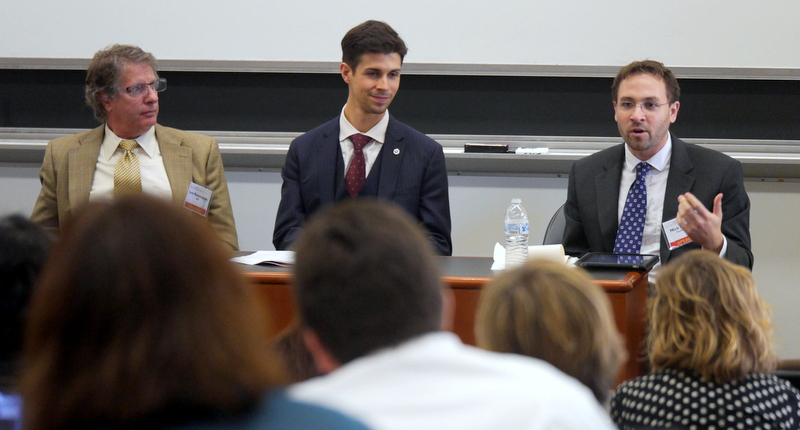
Nick Martin (far right) on the Tech@State panel on “Using MOOCs in a Global Context”

1) There is a gap between a classroom and MOOC

Throughout the panel on “Using MOOCs in a Global Context”, the distinction between online education and MOOCs came up repeatedly. MOOCs are a form of online education, but not the only form. And that’s problematic because educators are feeling like they are stuck with a binary choice. However, there are alternatives that we’ve been exploring that allow highly interactive small-group forums. Taylor Corbett (@data4d) of OpenEMIS gave a short ignite talk during the session, and part of us wondered what it would be like if you could instantly go back and watch the talk afterwards or click around content while he spoke, or ask him questions directly in a conversational manner — just as students were able to do in our Mobiles for International Development course when Taylor spoke there only a few weeks ago.

P1080503

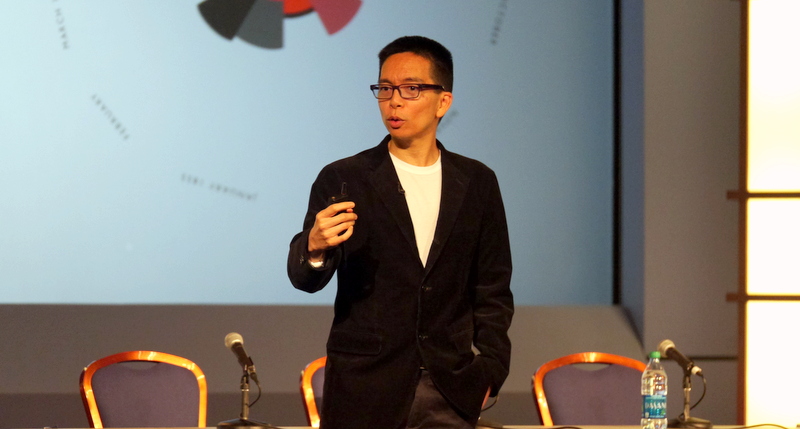
John Maeda, President of the Rhode Island School of Design, giving his keynote address

2) Instructional design will be as important as educational content

A recurring theme throughout the day was the increasing significance of design. John Maeda nailed it during a talk that included elements of his previous TED Talk on How Art, Technology, and Design Inform Creative Leaders. We’ve written previously on how content will be vital for online education, similar to what’s happening with Netflix for online video, but what came across was that design will be at a premium for not just what gets included, but how. This is literally a matter of life and death, as Maeda pointed out that Florence Nightingale saved lives of soldiers not with nursing, but with statistics and a clever visualization that influenced decision makers to look at thousands of soldiers dying needlessly in hospitals. We’ve tried to think critically about design in our own work — getting the most information into as few seconds of student experience as possible, such as our logo animation redesign.

105 Alumni

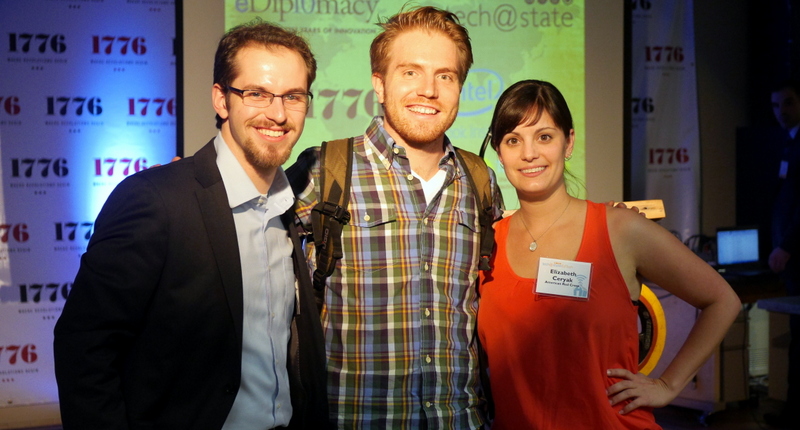
TC105: M4D course alumni hanging out at the e-Diplomacy happy hour at 1776 DC

3) You can’t network over a beer in online education

One of our course facilitators, Graham Lampa (@grahamlampa) brought up an excellent point in our MOOC panel, which is that the informal qualities of education and in-person experiences can be as valuable as the formal knowledge transfer. Until you can virtually “grab a beer” with someone, online education will not be able to replace the informal qualities. However, there are ways to leverage both! We sponsored the happy hour at 1776, where they had tweets from the day on #edip10 and #techatstate displayed on large monitors (courtesy of Zoomph), so that the walls were removed between offline and online content.

Moreover, we had a great time seeing everybody from our classes who we had the pleasure of meeting in person, including our Alumni Beth Ceryak (@bethceryak), Matt, and more!

Did you attend the 2013 Tech@State conference and come away with any other conclusions? Feel free to post your comment below and/or share your thoughts using the hashtags, #techatstate and #edip10.

Last week, I was fortunate enough to present at PopTech 2013 and participate in the Poptech Social Innovation Fellowship program along with nine other super inspiring social entrepreneurs. What an amazing experience!

I had the great fortune of getting fantastic training/advice/wisdom from the Poptech faculty on the content of my talk as well as other challenges that we’re facing as an organization. Many thanks to Ken Banks, Michael Duarte, Erik Hersman, Cheryl Heller, Peter Durand, Jim Koch, Chloe Holderness, Kevin Starr, Heather Fleming, Grant Tudor, Lisa Witter, Priti Radhakrishnan, Susan Phillips, and the amazing staff at PopTech: Becky, Andrew, Ollie and Leetha. This group was truly an all-star cast of individuals at the forefront of social innovation. Read about them here.

Our Prezi as it appeared for PopTech. Click through and check it out!

After the presentation on Friday, a number of folks asked me about the presentation format. so I decided to share some details about how we made it and the design decisions that went into the process.

1. Unify your presentation with your organizational identity

In telling our story, we didn’t just want to read off bullet-point slides. We wanted to bring the audience into our office and show them what we see. We also wanted to take the most literal skeuomorphic approach to our presentation: a map should be represented by a map, a note by a sticky note, a website by a web page, etc. This was partly on the principle that we had the freedom to create our elements and not use pre-existing photos, but also that it reflects much of the design sense we have used in our online learning products. That unity of experience between our learning design and presentation intent was important to us — what you see is what you get. However, using that framework meant that we had to create depth in two-dimensional infinite canvas while still having believable rectangular frames to zoom into — an effect that we created through a fisheye illustration.

2.  Bring your Prezi to Life

Since we had dedicated creative time to this project that is passionate about representing our brand well, we wanted to do a good job, but we didn’t want to overdo it either. We looked around for inspiration and we found a few neat ideas around the internet, which used subtle animated gifs to bring an environment to life. Of course, Prezi required that we used SWF instead of animated gifs, but we could achieve pretty much the same looping effect after we inserted the animations into our Prezi.

3.  Get feedback and back up everything

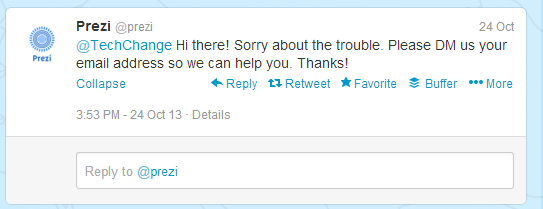
The most valuable part of this project wasn’t just the creative team, but the feedback from other PopTech fellows and faculty about distilling information and pacing it. At the end of the day, Prezi is based on Flash. The same problems that led to us treating it as unreliable three years ago exist today. Naturally, the night before our presentation we were unable to download the presentation. Fortunately, we were able to work offline to rebuild our changes and export them for the presentation. The one saving grace of this experience with Prezi is that their online customer support was right on the ball when their product started having trouble. That’s one thing that we consider vital as we approach 10k followers — not just maintaining a product, but building a community.

I’d like to give a special shout-out to my fellow fellows: Esther, Nicole, Donnel, Emily, Alex, Anushka, Nathaniel, Jessica, and Julia – you all are an inspiration! Grateful for this experience and hope to join for PopTech 2014!


PopTech Sparks of brilliance 2013Curious about the future of online learning? Don’t miss TechChange Founder & CEO, Nick Martin, discuss this topic and our work at TechChange on Friday, October 25 via livestream of the 2013 PopTech conference.

Nick Martin, one of the 2013 PopTech Innovation Fellows, is attending the “Sparks of Brilliance” PopTech conference this week. He will be speaking between 2:30 PM to 3:00 PM EDT (14:30- 15:00 EDT) on Friday, October 25 about our work at TechChange to train international development practitioners to use technology better. In Session VII, Nick will be speaking alongside Miriah Meyer, Francisco Cervera, Lisa Servon, Dan Schulman, and Nicole Stubbs.

Catch Nick’s talk streamed live here: http://poptech.org/live and join the conversation with #PopTech using the channels listed here.

Go Nick!

Remember when map making used to be simple? Neither do we, which is why we’re teaching a new course on Mapping for International Development. This increasingly complex intersection between open/closed data, online/offline tools, and practitioner communities all relevant to digital mapping could use a handy primer.

Last week, MapBox closed a $10 million Series A from Foundry Group as part of a move seen to rival Google Maps with an open-source mapping solution. While the results of this investment remain to be seen, there are echoes in this conversation from the intense debate last year around the World Bank’s initial decision to use Google Map Maker instead of OpenStreetMap, which raised concerns from organizations such as Global Integrity about why the bank would choose a closed data solution over an open one. Ultimately, the World Bank reversed its decision and went with OpenStreetMap, which provides simple, complete access to its database under an open license.

And it’s not just about the maps themselves, but what is being done with them. The Global Slavery Index by Walk Free chose to visualize slavery numbers by country. Team Rubicon partnered with Palantir to repurpose maps used to track IEDs to help rebuild homes needing repair after Hurricane Sandy. Democracy International and New Rights Group visualized voter data in Tunisia to present stakeholders with better information for the electoral process. And InterAction produced an NGO Aid Map to improve coordination of NGO activities.

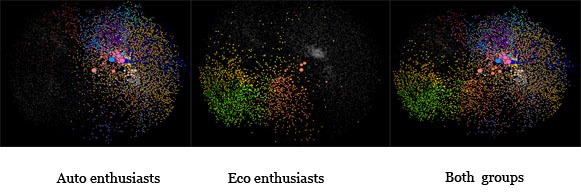
Image from the Atlantic on Morningside Analytics visualization

Photo Credit: The Atlantic

But data visualization and mapping isn’t just restricted to geodata. Since information and individuals are only a click away online, work being done by Morningside Analytics to map the “cyber-social geography” of the internet — analyzing who is talking to whom and what they’re talking about — is just as valuable, if not more so.

So far, we’ve had a great response for the course on Mapping for International Development, which is nice to know we’re not alone in our enthusiasm. We’re excited to welcome participants so far from about a dozen countries including Australia, Cameroon, Canada, Ecuador, Jordan, Kosovo, Mexico, the Netherlands, the Philippines, USA, and UK. Participants in this course represent organizations such as the World Bank, UN Foundation, UNICEF Innovations Lab Kosovo, Gallup, InterAction, Telecentre Foundation, Canada Foundation for Innovation, Australian National University, IFES, School of Oriental and African Studies, Centre for Development Innovation, Generations for Peace Institute, ACT/JEVS Human Services, CIMM, Stability: International Journal of Conflict and Development, and many more.

There’s still time to join, so if you’re interested in registering for our four-week online class on Mapping for International Development, register here. We hope you’ll join us!

Today as we approach 10K followers on Twitter and 5K Facebook likes, I am taking a step back to understand how we created a vibrant online community. More than 2 years and 13,000 tweets ago, I first took the reigns of the TechChange social media accounts. At that point we were still four months out from launching our very first course and we had only received about 30 applications, zero of whom had officially enrolled. I thought, “how can we establish trust that our courses will empower social change agents?”  Since then, we have worked tirelessly to build the best online learning experience possible with a robust social media community to promote it. We have now trained nearly two thousand professionals from over 100 countries and a large portion of them determined TechChange to be a credible organization thanks to our social media content. Now looking back, here are three principles we have followed to build our brand as a learning resource for social change.

1. Your Online Brand is a Community Before It’s a Product

Before launching our courses, the only accessible content we were producing was on our blog and our Twitter and Facebook accounts. We had to generate enough quality material for people to pay attention to us and apply to our courses, which were still being built. When I started at TechChange, we were tweeting on average 6 times a day and had almost 2,000 followers. We decided we had to engage a lot more with our community and so we bumped it up to 15-20 tweets/day, which increased our follower rate by 20% month over month throughout the next year. 12% of our course applications were from people who discovered us through Twitter and Facebook and out of all of our marketing methods, these applicants were the most likely to officially enroll. In other words, our highest conversion rates came from social media engagement. We listened to what our community had to say so we weren’t just building courses for them, we were building courses with them.

If your organization hasn’t made online community engagement a priority, then you are missing out on exposure and building credibility. It is never too early to start engaging with your online community, even if your products or services aren’t even publically launched. People interact on social media to share ideas and as long as yours are good, you will find your community will grow fast.

2. Define Your Community and Respond to Their Content

We work in tech for social change, which is actually quite a large idea that is difficult to define. To help figure out our target community, we generated a spreadsheet with our course subjects in each column, such as emergency management, mobile phones for international development and health, eGovernance, social entrepreneurship, etc. I have filled up each column with dozens of blogs and news outlets in these areas, which I read and scan through daily on my RSS reader. This list of 100+ thought leaders and organizations has become one of my most valuable documents I have created at TechChange.

Our community is vibrant and highly active on Twitter. 15% of our followers tweet hourly and another 15% tweet at least daily, so we know there is always an actual conversation happening. Not only do we respond to and discuss our followers’ content, but by promoting it we show that we are aware of every single new development in the field. This has been vital to our role as educators in a space that is rapidly changing to offer our participants the latest tools, theories, and case studies possible.

3. Use the Right Tools

There are a plethora of social media engagement tools fighting for you to do a 15-day free trial and give you all the analytics you need to be a “guru.” The truth is, you are being successful in social media when you act like a human that adds value to the community. However, there are a few tools that I use to make that process much more efficient. I mentioned above that I read through content from 100+ blogs and news sites everyday. This translates to about 500 new stories every 24 hours that I have to sift through and decide which are the most interesting and relevant.

Feedly allows me to do this extremely well, by organizing my content topically and integrating with other tools very easily. It is hands-down the best RSS reader (Google Reader included!) and you should switch to it today.

Buffer is my favorite tool to time tweets throughout the day and I can add tweets and Facebook posts to it directly from Feedly. I spend the first 30-60 minutes of my morning getting this app topped up for the rest of the day. User beware: people can easily tell when you’re not being genuine and are robotically churning out timed news stories. It is important to remain engaged and try to keep a discussion going around each story.

Tweetbot while costly, this app does give you all the functionality you need if you are managing multiple accounts. You can quickly search new trends, stay in tune with twitter chats, and have it all synced up between your computer and mobile. If you are particular about your column feeds, feel that customization is a necessity, and want to do all your social engagement in one place then I definitely recommend it.

For analytics there are plenty of subscription options, from Sprout Social and Social Bro to Topsy and Hootsuite. They will all tell you the best times to engage with your followers, who they are and what they are talking about. They will give you ranking and influence scores and all sorts of other data that is nice to know but probably won’t change your behavior too dramatically for how much they will charge you. However, there are a couple analytics tools that can give you important data for free. Hashtracking and TheArchivist are fantastic. They gather data on particular hashtags when you want to track a Twitter chats or event. Another solid tool is TweetReach, which tells you who interacts with you most and how influential they are.

The way people interact online seems to change every year and the top organizations will create strategies for every new social media channel. These three guidelines have helped us become a reputable online education provider thus far and as we continue to follow them, we hope to be able to navigate all the changes that await us.

—-

Screenshots from Followerwonk