Last month in DC a commercially-available quadcopter crashed into the White House and brought new public interest into the regulation of drones. Only a week before the incident, the Department of Homeland Security held a conference open to civilians but explicitly closed to the press to demonstrate, among other capabilities, a similar quadcopter strapped to 3 pounds of inert explosive.

DJI, the China-based manufacturer of the drone in use, released a mandatory firmware update to geofence a 15.5 mile radius around downtown Washington, DC, only to ask users to roll back their update due to “unanticipated flight behavior.” Even if the update worked, it would only have been applicable to Phantom 2 models, and not the Phantom 1 that was used in the White House incident. While these efforts are a start, security experts are skeptical that such techniques would deter a terrorist.

But last week while national security was struggling with what to do with drones in DC, the first-ever Drones for Good Challenge in Dubai sought to “find the best uses of drones to public services and improving people’s lives.” After reviewing over 800 submissions from 57 different countries, the $1 million prize was awarded to Swiss company Flyability, for creating a “collision-tolerant drone” designed to enter hostile environments such as a burning building filled with smoke without endangering aid workers.

But how do we incentivize more drones for good and fewer drones for terrorism?

The Federal Aviation Administration is still struggling to finalize drone regulations after being ordered to do so in 2012 by Congress. But the concern among hobbyists is that rushing the regulatory process could create burdensome rules that hamper innovation. One solution is “regulatory sandboxing”, where some initial constraints are relaxed while rules are still being made, keeping a focus on public safety. The hope is that reducing the hidden costs of burdensome regulations will spur innovation here in the US. For example, Amazon is testing their drone delivery services in Australia due to regulatory opposition in the U.S.

But reducing regulations isn’t enough. Organizations such as the UAViators: Humanitarian UAV Network seek to support a global network of UAV hobbyists to share information and promote community engagement. Expanding that network further will be an effort in education as much as drone delivery. Digital Democracy, for example, helped a community in Guyana build a drone to map deforestation. But those efforts were coupled with the drones becoming something more. According to Digital Democracy’s Gregor MacLennan:

We didn’t want to just fly into Guyana and fly a drone over the local villages. Our interest was whether this technology could be something that can be used and controlled by the communities themselves, and become a tool of empowerment for helping them have more of a say in their own future. We wanted the Wapichana to be able to repair it themselves, fly it themselves, and process the images to use for their own means.

In blurring the boundaries between new technology, STEM education, and sustainable development, the language and endeavors of drones for development are aligning with another frontier in development: 3D printing. And no surprise, it’s already possible to dream of printing your own drone and drone parts. Voxel8, a company founded and run by several Harvard and MIT professors, just released a developer kit for 3D electronic-device printer shipping in late 2015.

As the frontiers of development become the present of implementation, regulation and education will continue to determine the boundaries of what is possible.
What role can a mobile data collection app like Magpi have in fighting Ebola in Sierra Leone and other countries? How can Magpi address prevention, contact tracing, treatment and other challenges in managing Ebola?

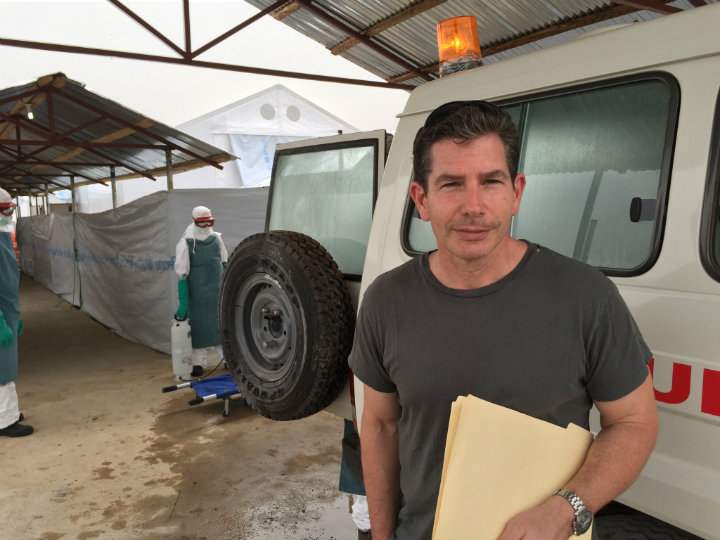
Dr. Joel Selanikio will join us in a free webinar on February 26 to discuss his recent three month tour in Sierra Leone treating Ebola patients. In his talk, he’ll share the challenges of electronic data collection in Ebola treatment units and detail efforts to improve data collection practices across the world with his award-winning mobile data collection software, Magpi.

February 26th, 2015 at 10:00 am – 11:00 am EST
Virtual fireside chat with Joel Selanikio

Joel Selanikio, field

Joel Selanikio in the field. Photo credit: TinySpark

To learn more about Joel and Magpi prior to this webinar, please check out the following links:

Death Becomes Disturbingly Routine: The Diary Of An Ebola Doctor (NPR)

Magpie Helps Collect NGO Data — One Part of Helping Deal With The Ebola Crisis (Forbes)

The surprising seeds of a big-data revolution in healthcare (TedX)

Ebola: One Doctor in a Firefight (TinySpark)

Former CDC epidemiologist Dr. Joel Selanikio on the Ebola crisis  (CCTV)

Watch Joel’s TEDxTalk: The surprising seeds of a big-data revolution in healthcare:

Hope you can join us for the live session on February 26 at 10:00 am ET. Sign up now!

Photo credit for featured image: the Magpi Blog.

At TechChange, we believe that online learning doesn’t have to be boring, which is why we have an in-house animation and graphic design studio. What is it like to be a production designer and animator working with international development organizations? Read on to learn about what it’s like to be on the TechChange Creative Team from Senior Production Designer, Pablo Leon.

Where are you from?
I was born in Los Angeles, California and grew up in Guatemala.

What did you do before working at TechChange?
I was a sign artist at a store, and also did a lot of freelance work with graphics and such.

What exactly do you do at TechChange?
As a senior production designer, I wear many hats in the creative process. I’m a production designer, where I set out to create the look and feel of our projects. I’m also an illustrator. In addition, I do some motion graphics animations.

TechChange ICT4D animation 

How did you hear about TechChange?
I was in school at the time and decided that being a sign artist was just not for me. I wanted to do more with my skills. One day while I was browsing the web, I saw a post for a creative job at TechChange. I read up on the company, liked what I saw, went in for an interview, and the rest is history.

How did you get into animation?
I graduated from the Art Institute of Washington with a degree in media arts and animation. Animation, cartoons, and comics have always been a passion since I was young, and I didn’t see a reason to grow out of them.

TechChange CGAP animation

What is the most important lesson you’ve learned in doing graphics and animations for international development?
It is very important to be socially aware of what best conveys a message on screen. Translating certain topics to a visual medium can sometimes be difficult, especially when you’re not familiar with the subject or if it’s a very sensitive subject, such as religion.

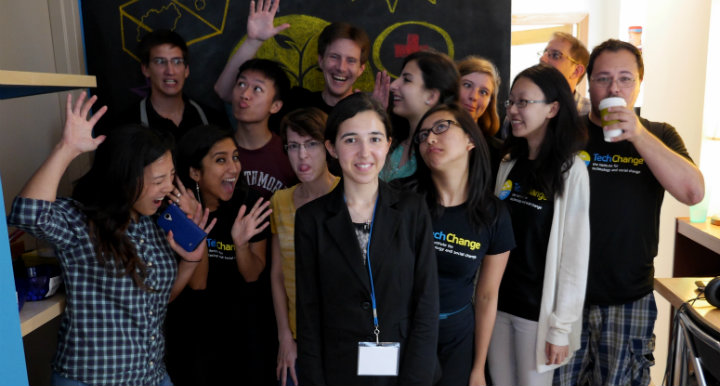
The TechChange Team with the 2014 TechGirls during the Job Shadow Day visit The TechChange Team with the 2014 TechGirls during the Job Shadow Day visit 

How do you keep up with the latest developments in animation/multimedia technology and trends?
The Internet is a good place to start but there are only a handful of websites out there for it, such as Animation Scoop, or the ever controversial Cartoon Brew. The animation community is not huge but we tend to talk and learn from each other a lot.

What do you love most about working at TechChange?
I have the most fun when I can take complex content, tear it apart, and put it together with a narrative to make it simple for everyone to understand. The second best thing would be the coffee here. And arguing about geek culture wearing a Mexican wrestling mask is a close third on my list.

Between Two Nerds: Episode 1

What is your favorite TechChange moment so far?
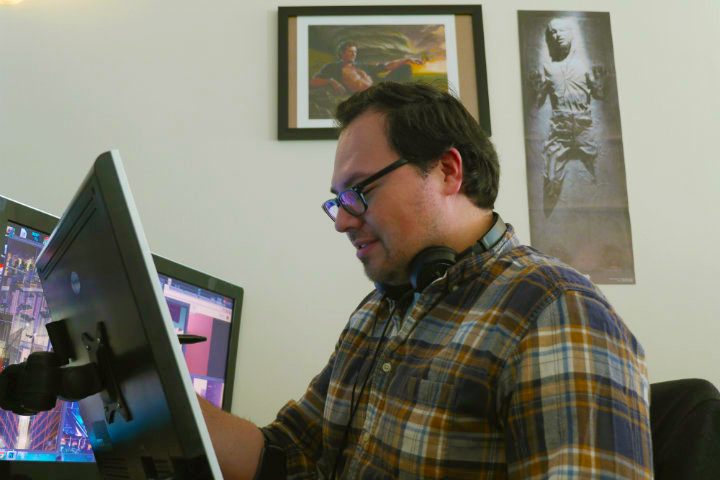
Our move to a new office on U Street from Capitol Hill, and being able to hang up my Jurassic Park’s Jeff Goldblum print is quite a highlight.

Pablo with Jeff Goldblum photo Pablo works at his desk under his Jeff Goldblum photo 

What do you do when you’re not at TechChange? 
Basically I just draw and paint on my free time. I love working on the projects I get for TechChange, but working on personal projects is equally important as a stress reliever. I’m not a fan of resting, so workaholics unite!

If you had to direct someone to the best place to eat in D.C. where would it be?
Burger Tap & Shake has the best burgers in town. You cannot question me.

As a Star Trek fan, I found the most amazing technology on the TV show to be not the ship cruising faster than the speed of light or even the life-saving tricorder: it was the replicator…or actually the “Holodeck”. These machines allowed the futuristic Starfleet crew to conjure up a real item, on command, be it Earl Grey tea or a prototype warp engine. They were able to go from idea to physical object in mere moments, with only their imaginations as the limiting factor.

Holodeck in Star Trek

Holodeck in Star Trek

Photo credit: Memory Alpha

3D printing is the closest invention to the Holodeck that we have today. The 3D printing industry has become a bit of a darling to futurologists, venture capitalists, and magic-bullet seekers aplenty—and for good reason. According to a report by the research company, Canalys, the industry is going to grow by 500% over the next five years, becoming a $16.2 billion industry by 2018. Given this estimate, it’s no wonder that 3D printing is being seen as disrupting the manufacturing industry and heralding a new industrial revolution.

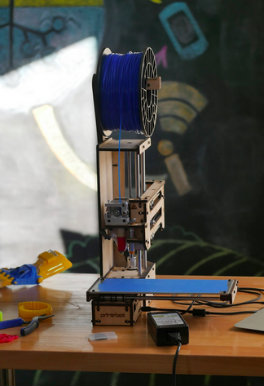
A 3D printer at the TechChange Office

And despite the hype, they might be right. There are several ways that 3D printing can change and improve lives. Here’s why 3D printing will change the world as we know it:

1. 3D printing is advancing STEM education.

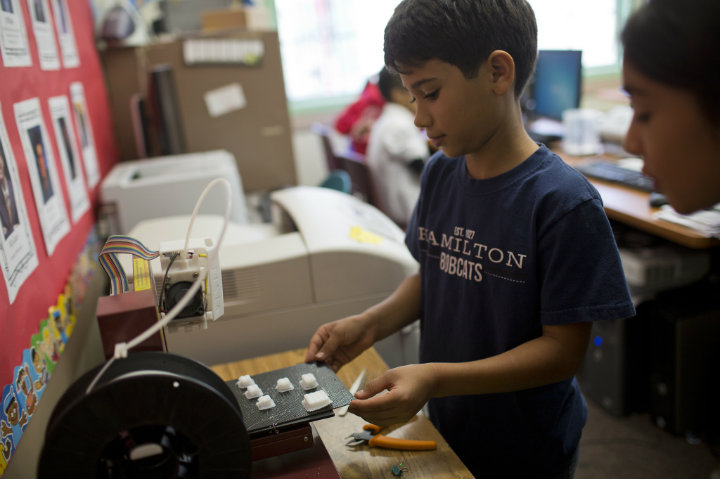
I put this one first because I believe it really is the biggest and cannot be overemphasized. Education, and specifically STEM education (Science, Technology, Engineering, and Mathematics), will be the single greatest beneficiary of 3D printing technologies and investment. These low-cost, simple, and fast 3D printers offer something that remarkably few technologies do: integration and application of school subjects in an engaging way. Students, in an effort to simply make things, are teaching themselves design, programming, prototyping, iteration, and production—all without realizing it. A school in Pasadena recently acquired a 3D printer and has already experienced the collaborative and creative problem-solving it allows among teachers and students. Teachers will tell you that getting students to solve challenges and learn the skills along the way is infinitely more effective than simply working through textbook chapters in a detached and uninspired routine.

Pasadena school students 3D printing in their classrooms

Pasadena school students 3D printing in their classrooms

Photo credit: Southern California Public Radio

2. 3D printing adds an entirely new dimension to repairs and customization.

Repairing items with 3D printing isn’t simply about cheaply replacing a broken wall hook (though it can do that too). For much of the world, a hardware store within 200 miles is a luxury. I served as a Peace Corps Volunteer in Madagascar, and the repair and tinkering abilities of my Malagasy friends was jaw-dropping. They would build lanterns out of tomato paste cans, and once use a cigarette filter on the gas line of his car to get us home. 3D printers can level-up the capacity of these folks the world over, and in ways that we can barely anticipate.

A time lapse video of a 3D printer at TechChange’s office

3. Healthcare and prosthetics got a new sub-field.
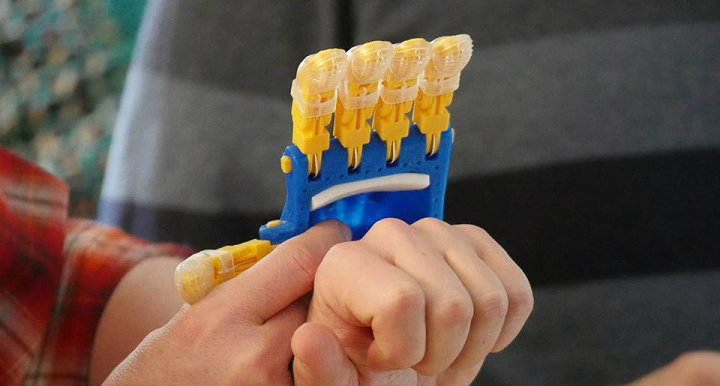
The most obvious application in 3D printing has so far been in the field of medicine, biomedical devices, and specifically prosthetics. In the world of artificial limbs for example, 3D printers are absolutely fantastic not because they completely upend traditional prosthetics, but because they benefit from it and supplement it in really powerful ways. Whole hands, arms, casts, and splints can be customized to fit individuals and their unique conditions. This area addresses probably more than any other sector, the “why” of 3D printing.

3D printing prosthetics

3D printed prosthetics for children during e-NABLE’s visit to TechChange

4. 3D printing is making the manufacturing industry more competitive than ever.

With the help of 3D printing, small-scale, adaptable, and distributed manufacturing will be competitive. Really competitive. It’s not going to happen tomorrow, but it’s moving in that direction. When you start adding up the landscape infrastructure where there is greater build quality, flexibility with a greater number of materials and sizes (Shanghai WinSun Decoration Design Engineering Co, is already 3D printing houses), and all at lower costs—a model emerges that competes directly with current industries at current wages for a large number of applications. It’s altogether possible that the phone you buy in the future will come built custom for you from a machine down the block; and probably also delivered via drone (which in turn would probably also be 3D printed).

Although we are still in the early days of 3D printing, there is still so much to learn, and new printers, materials, and ideas are coming into focus everyday. This is why the timing is so critical and the opportunity so golden to be a visionary and imagine all that we can accomplish through 3D printing.

What would you request in your own Holodeck/3D printer that could solve the world’s challenges? Let us know in the comments and/or tweet us @TechChange.

Interested in learning how 3D printing can promote social good? Enroll now in this online course.

Do you want to apply your programming skills to make a difference in the world?

We’re excited to announce a summer fellowship program for recent graduates and rising college seniors and juniors. The fellowship will provide practical training in web development as well as a unique exposure to a range of applications and organizations using technology to tackle a variety of global challenges — from creating prosthetic limbs with a 3D printer to combating malaria with mobile devices.

As a fellow, you will spend three months designing and implementing a web development project related to education, technology, and social good. TechChange staff will provide training, mentorship, and a series of events to support you in your process.

Learn more and apply here before the deadline on February 15, 2015: https://www.techchange.org/fellowship

Email any questions to info [at] techchange [dot] org.

What is it like to work in marketing and communications at an edtech social enterprise? Check out what TechChange’s Director of Marketing, Nancy Ngo, has to say about managing global campaigns that promote social change through technology training.

Where are you from?

I grew up in the DC Metro Area in the city of Falls Church, Virginia – a very multiculturally diverse suburb of Washington, DC.

What did you do before working at TechChange?

I started my career at Google’s headquarters in Mountain View, California where I promoted several of the company’s core Search products and advised senior executives including Marissa Mayer. Since then, I’ve done marketing and communications at various tech companies, U.S. government agencies, and non-profit organizations.

While completing my graduate program in International Economics and International Relations at Johns Hopkins School of Advanced International Studies (SAIS), I specialized in Southeast Asia international trade issues which ultimately brought me to a rapidly growing internet company in Vietnam called VNG Corporation (formerly known as Vinagame). Although I had done many online trainings independently, it was in Ho Chi Minh City where I had my first professional foray into edtech. I saw online education as a practical solution to address broken education systems that impact the global economy.

How did you hear about TechChange?

I found out about TechChange when reading the 2012 Economist article, “Geeks for Good”. As I learned about the company, I was struck by how unique TechChange was as a B Corporation – a certified social enterprise – located in downtown DC. I saw TechChange as a confluence of my interests in technology, international development, and an opportunity to apply my marketing and communications skills at an edtech startup to help grow the business at the ground level.

What exactly do you do at TechChange? What does a typical day look like for you?

No two days at TechChange are ever exactly the same. Generally, I manage integrated marketing campaigns to grow TechChange’s global learning community. These campaigns involve working with the team to communicate TechChange’s story and the impact of our trainings and alumni. They also involve finding new ways to reach more students across the world through partnerships and events. In addition, I manage the TechChange blog, social media channels, and media relations.

Nancy, Nick, and Erik prep for TechChange's FailFest performance

Nancy, Nick, and Erik prep for TechChange’s FailFest performance

How did you get into marketing and communications?

I’ve always been a media junkie that loves writing. My passions for media, writing, and international affairs brought me to a public affairs internship with Time Magazine in New York City while attending the University of Pennsylvania. Since then, I’ve always been fascinated with the challenge of crafting the right messages to target audiences around the world in the right way and at the right time.

What is the most important lesson you’ve learned in international development and marketing?

It comes down to understanding your audience, wherever they are in the world, and being empathetic to their experience. In the context of the audiences we work with at TechChange, we constantly have to think about the constraints they are under including limited access to internet, inconsistent electricity, coordinating globally dispersed teams, and/or managing projects in the field. The key is understanding that there is no one size fits all approach to reaching customers, especially ones that are transient, based around the world, and focused on different functional areas and contexts.

Also, the best way to be successful at promoting a brand or product is when you wholeheartedly believe in what you’re promoting.

How do you keep up with the latest developments in marketing, communications, technology, and international development?

These days, I get my news mostly through social media platforms including LinkedIn (Pulse), Twitter, Facebook with the help of some very smart friends sharing useful links, and email newsletters. I also use aggregators including Feedly, Google News, and FlipBoard. I’m always looking for inspiration from great global brands that execute clever and effective campaigns. In addition, I find it very useful to learn from PR crises and branding mistakes that companies and organizations make as well.

The ever-evolving media landscape forces marketers to constantly keep up to speed on different ways to reach and interact with customers. I try to keep my marketing and comms skills sharp by teaching myself the latest technology tools and best practices in implementing these tools. I do this by frequently attending webinars, taking courses online and in person, reading industry blogs, keeping in touch with colleagues in my industry to share lessons learned, and trial and error in my day to day work.

What do you love most about working at TechChange?

TechChange is the type of place where you proudly wear your nerd on your sleeve! I enjoy the culture of fun camaraderie among tech-savvy international development nerds that have lived all across the world. It’s a work environment that empowers you with creative freedom to take ownership of initiatives that help grow the company. We’re all very autodidactic and are constantly learning new skills from both each other and outside of work with online courses and trainings as well.

Nancy and the TechChange team with David Bray, Chief Information Officer of the Federal Communications Commission (FCC) at the TechChange office

Nancy and the TechChange team with David Bray, Chief Information Officer of the Federal Communications Commission (FCC) at the TechChange office

What is your favorite TechChange moment so far?

It’s tough to list just one. I’ve really enjoyed our Fail Song performances, coming up with clever band names such as “CAPS LOCK CRAZY” and “Beauty School Valedictorian”, the time when the CIO of the FCC, David Bray, came to visit as a guest speaker in one of our courses, and many more. On a day to day basis, I love interacting with our global alumni whether it means hearing the challenges community health workers are facing on the ground in fighting the spread of Ebola, or learning about their career success stories with the help of their TechChange trainings over the happy hours we host regularly in downtown DC.

What do you do when you’re not at TechChange?

Reading, spending time with family and friends, salsa dancing, and planning my next travels.

If you had to direct someone to the best place to eat in D.C. where would it be?

My favorite Vietnamese restaurants are all out in the suburbs of D.C., especially in Falls Church.

With the emergence of the 3D printing industry, how can 3D printing help kids who need upper limbs and fingers?

Join us in a free webinar discussion with e-NABLE, a global online community of humanitarian volunteers designing, building and disseminating inexpensive, functional 3D-printed prosthetics for children.

3D Printing Prosthetics:

A conversation with Jon Schull & Jeremy Simon of e-NABLE
January 22, 2015 at 10:00-11:00 am ET
Register here.

Please register in advance to participate in this free live event. If you cannot attend the event live, the session will be recorded and archived so anyone will still be able to sign up to see it after January 22.

Monjolo energy-meter sensor created by University of Michigan’s Lab11. Image credit: Umich Lab11

How can remote sensors and satellite imagery make monitoring and evaluation easier and more accurate than pen-and-paper surveys?

In my most recent post on many of the technology tools for M&E we discussed in the inaugural round of TechChange’s Technology for M&E online course, the course participants and I shared several of the current digital data collection tools. These tools include Open Data Kit (ODK), Magpi, SurveyCTO, Taro Works, Mobenzi, Trackstick, and Tangerine.

Generally speaking, global development recognizes the benefits of mobile data collection–as Kerry Bruce said in the first course, mobile data collection is a “no brainer.” But what kind of cutting-edge technologies like remote sensors and satellite imagery are available for collecting large amounts of data more efficiently and accurately?

In this upcoming round of the course, we will be highlighting these cutting-edge technologies, how they have been used in development, and how they can change data collection methods. Satellite imaging is being used to remotely monitor illegal mining, urban development, and deforestation in real-time. Remote sensors provide accurate, real-time measurements for the adoption of water pumps or cookstoves by detecting motion and reading temperature.

We’re very excited to have presentations from the Center for Effective Global Action (CEGA) in the upcoming TC111: Technology for Monitoring and Evaluation course. CEGA is a global development research network that works to create actionable evidence for policy makers and program designers. They also design and test new technologies to find new solutions to the problem of poverty.

satellite imagery

CEGA is researching how remote sensors and satellite imaging can help create more accurate measurements. We have three researchers on this topic joining us in the course: Guillaume Kroll from CEGA’s Behavioral Sensing program; Dan Hammer, a Presidential Innovation Fellow working with the White House and NASA to increase access to satellite imagery for the non-profit sector; and Pat Pannuto who researches sensors at Lab11 and is working on numerous projects with CEGA.

Dan Hammer was the Chief Data Scientist at World Resource Institute’s Data Lab and worked to analyze deforestation from satellite images. In a recent article, Guillaume highlights how remote sensors are reshaping the way we collect data and highlights CEGA’s success with stove usage monitors in Darfur. Pat presented at the Development Impact Lab’s State of the Science on how remote sensors can be used for data collection and monitoring (slides available here). Pat is trying to “solv[e] the ‘last inch’ problem: bringing connectivity and computing capability to everything” and thinking about how connected devices (the Internet of things) can impact global development.


Patrick Pannuto: “Sensing Technologies for Data Collection & Monitoring”

Interested in learning more about the cutting edge technology for M&E including remote sensors and satellite imagery? Join our upcoming course on Technology for Monitoring and Evaluation.

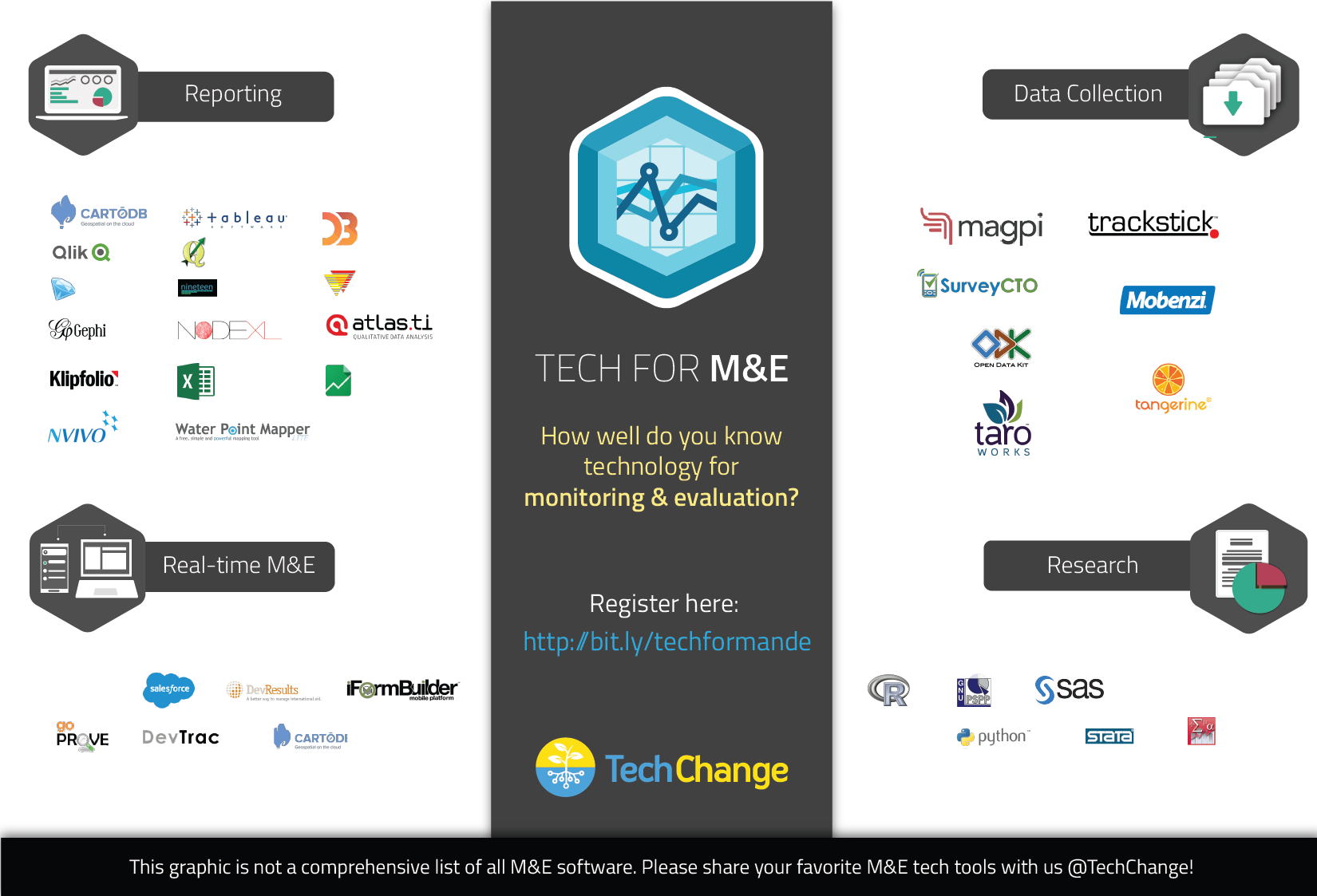
With the rapidly growing field of monitoring and evaluation, there are many technology tools that are designed to help the many roles of M&E practitioners. The fastest growing area has been digital data collection, which currently uses mobile phones and portable GPS systems. Reporting has become easier with all the tools for data visualizations and data cleaning. There are also many research options with statistical software and programming languages for data entry, documentation, and analysis. In addition, real-time M&E tools let you do program and data management with real-time project updates. What we found in the course was that there are tech tools that integrate multiple aspects of M&E.

Here are several of the tools we discussed in the inaugural round of our Technology for M&E online class last fall, as crowdsourced by over 100 IT experts and M&E practitioners based in over 30 countries. In the next iteration of this course, we’ll be covering some of the latest tools including satellite imaging, remote sensors, and more.

What M&E technology tools do you use? How has your experience been with these tools listed? Are there great tech tools for M&E that we missed? Please share with us in the comments or tweet us @TechChange.

Interested in learning about these tools more in depth? Join us for our popular Tech for M&E online course that runs 14 September – 9 October.

GIZ Nepal participants Pushpa Pandey, Valerie Alvarez, and top TechChange student Bikesh Bajracharya with TechChange Communications Associate Samita Thapa, (and TechChange cubebots).

In our most recent mHealth online course, twelve participants from GIZ (Deutsche Gesellschaft für Internationale Zusammenarbeit) Nepal enrolled in the course to support its mHealth pilot for adolescent sexual and reproductive health. This holiday season, I was fortunate enough to return to my native home of Nepal to meet these TechChange alumni in person at the Nepali-German Health Sector Support Programme (HSSP) at their new office in Sanepa, Nepal. Since the September 2014 mHealth pilot launch, more than 150,000 adolescents have used their interactive service.

Nepal’s National Health Education, Information and Communication Center (NHEICC) developed a National Adolescent Sexual and Reproductive Health Communication Strategy (2011 – 2015) that stressed strongly the use of modern methods of communication in its implementation. GIZ, Health for Life (H4L), and the UN Population Fund partnered under NHEICC’s leadership to initiate this SMS based mHealth project – the first in Nepal. The SMS messages and interactive package focus on delaying marriage and pregnancy, healthy timing and spacing of babies, health and hygiene, and addressing gender based violence. The local mobile services provider, Nepal Telecom and NCELL, distributed the interactive SMS package that includes an encyclopedia, role model stories, quizzes, and a hotline for further questions.

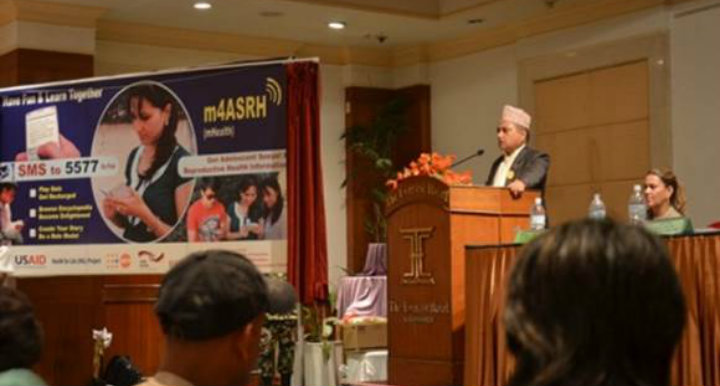
Mr Khaga Raj Adhikari, Minister, Ministry of Health and Population launching ‘m4ASRH’ (Mobile for Adolescent Sexual & Reproductive Health) on 18 September 2014.

Mr Khaga Raj Adhikari, Minister, Ministry of Health and Population launching ‘m4ASRH’ (Mobile for Adolescent Sexual & Reproductive Health) on 18 September 2014.

Since Pushpa had shared the status of the GIZ mHealth pilot in Nepal as her final project for the mHealth online course the day before we met, it was especially great to catch up with her in person! She expressed that this mHealth course was much more engaging and fun to complete than other online courses she has tried out. Bikesh, the top user in our course with over 400 tech points, is new to the GIZ team and very excited to apply what he has learned in the mHealth course to his work in Nepal. Valerie recently arrived in Nepal and very new to the GIZ-team, was also excited to learn how much the other participants were engaging and that she can still access all course material for four more months.

All three GIZ Nepal participants shared their astonishment on how many tech points Bikesh was able to stack up in the course and also the fantastic course facilitation by Kendra. They also admitted that hearing Pushpa present in the mHealth course gave them insights that they weren’t aware of even though they work at the same office. While taking a technological approach to development projects in a country like Nepal can be challenging, it is an even bigger challenge to get the government’s buy in. It was exciting to learn that despite some hurdles, this mHealth pilot was an initiative supported by the government of Nepal.

We are excited for the future of mHealth in Nepal and wish GIZ all the best in their continued success! We are also excited to welcome six more participants from GIZ Nepal in our upcoming Technology for Monitoring and Evaluation course in January to better measure the impact of this mHealth pilot! It is wonderful to see how GIZ is committed to mHealth and M&E through their investment in technology capacity building in Nepal.