
Bridging the Climate-Health Data Gap for More Resilient Health Systems
|
By Mignonne Fowlis, Senior Manager, Product & Programs, DataKind
When floods or heatwaves strike, local health workers on the frontlines often lack timely and contextually relevant data and information to help inform response. Climate change is reshaping the health landscape, yet many health systems have limited visibility to plan for its impacts. A new report from DataKind explores these gaps and outlines key opportunities to strengthen health system resilience.
Between 2030 and 2050, an estimated 250,000 additional deaths are projected from climate-sensitive diseases such as asthma, heatstroke, cholera, and malaria. Many of these deaths could be prevented with faster, more localized response. The hardest-hit communities are often those already facing socioeconomic disparities, particularly in low- and middle-income countries (LMICs) where health systems are stretched to serve millions.
The disconnect is clear: while 74% of weather agencies share climate data with health departments, only 23% of health ministries actually report using it in their planning. This means decision-makers often lack the visibility to anticipate outbreaks before they occur, whether it’s a dengue outbreak after heavy rains or heat stroke during extreme heat.
To understand why this gap remains and how to address it, DataKind conducted a global landscape study exploring how climate and health data could be better connected to strengthen health systems resilience. The resulting report, launching at the Global Digital Health Forum this month, is based on interviews with 19 experts across four continents, including frontline health organizations, researchers, and funders. It outlines the main barriers behind the climate-health data gap and offers practical solutions to address them.
Our research identifies five interconnected barriers that prevent health decision-makers from accessing and using climate data effectively:
1. Limited local data: Most climate data in LMICs often isn’t available at the local scale needed for health planning. Without localized, real-time climate data, health workers are unable to anticipate outbreaks or prepare targeted interventions for their communities.
2. Missing local perspectives in data design: National data collection systems often prioritize globally aligned agendas, underrepresenting rural, Indigenous, and marginalized communities, leading to data and interventions that are misaligned with community needs.
3. Incompatible data systems: Climate and health data are often organized in different ways, using different geographies, data formats, and standards. Without shared definitions of climate-related health risks climate and health datasets remain siloed.
4. Capacity gaps across levels: From data literacy for frontline health workers to advanced analytics expertise for disease modeling, capacity constraints hinder the effective use of climate-health data. Health practitioners often lack guidance on which climate variables are relevant to specific health conditions, while the advanced technical capabilities needed for forecasting disease outbreaks are often limited in low resource contexts.
5. Fragmented governance and short-term funding: Collaboration between health, meteorology, and environment sectors is often ad-hoc. Limited funding and unclear data-sharing practices can often hinder the long-term partnerships needed to build integrated climate and health data systems.
Despite these challenges, innovative solutions emerging across LMICs show that barriers are addressable when interventions center local needs and integrate with existing workflows:
These examples prove a critical insight: effective solutions can build on existing infrastructure and empower local actors rather than introducing entirely new systems. They also demonstrate the growing role that emerging technologies can play in overcoming data barriers.
Emerging AI technologies, including large language models, are transforming climate-health data integration. Tasks like cleaning data, converting file formats, and adjusting for geographic differences can now be automated, helping frontline workers access actionable insights faster.
AI-powered tools can guide frontline health workers through complex analytics, answer questions about data patterns, and translate between the distinct technical languages used by climate and health stakeholders.
Advanced technologies can accelerate progress but their success depends on the enabling environment behind them. Collaboration between subject matter experts and technology builders is essential to ensure that AI solutions address real-world needs and are grounded in local contexts. Equally important is investing in the foundational capacity that enables AI to work effectively and equitably, through strengthening data systems, developing local technical literacy, and embedding local ownership before moving toward advanced implementation.
With these foundations in place, responsible innovation can be effectively pursued. The report identifies key actions to guide future investments and collaboration across the climate-health data landscape.
Based on insights from experts and case studies, the report lays out six strategic actions for governments, donors, and technology partners to bridge the climate-health data gap.
1. Enhance access to localized, timely, and granular data: Prioritize community-level data collection, validation, and sharing to ensure relevance and equity.
2. Promote interoperability and data standardization: Develop shared data standards and templates for climate-sensitive health conditions and strengthen cross-sectoral coordination mechanisms.
3. Build capacity for climate-health data use: Provide practical training and peer-learning opportunities, from frontline literacy to advanced analytics and forecasting.
4. Design inclusive and user-centered tools: Build tools for low-connectivity settings with multilingual interfaces and AI features that make data easier to interpret, integrated with existing national health information systems.
5. Strengthen cross-sector and multi-level governance: Establish interministerial working groups, clarify data-sharing mandates, and engage communities as partners in decision-making.
6. Mobilize sustainable, locally anchored financing: Shift from short-term projects to long-term investment in locally led platforms and data ecosystems aligned with national health strategies.
Closing the climate-health data gap requires more than technical solutions. It requires investing in the people and organizations closest to the work, building governance systems that listen to community priorities, and providing sustained funding that lasts beyond individual projects.
The report demonstrates that while AI and data science can significantly reduce barriers to analysis and improve how stakeholders forecast and respond to climate-related health risks, their effectiveness relies on human interpretation, clear governance frameworks, and institutional trust.
The innovations and successful models across contexts have shown what’s possible. Working together, governments, donors, technology partners, and community organizations can transform how health systems anticipate and respond to climate threats, ultimately protecting the communities most vulnerable to climate change.
Discover how climate and health data can transform health systems. Read the full report here, join us at the Global Digital Health Forum (Dec. 3-5, 2025) to explore these solutions in action, or write to us at partners@datakind.org.
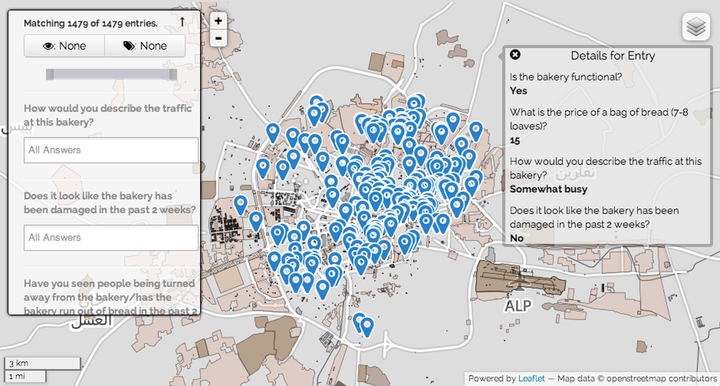
As Syria’s civil war draws close to its third anniversary, actionable data for foreign aid workers remains scarce. Although the...
Moved by images of buildings crumbling like sand castles and children wandering the streets crying for parents buried in the...
Curious about learning with TechChange? Check out our upcoming class: Digital Organizing and Open Government. Class starts Jan 7! Apply...