
*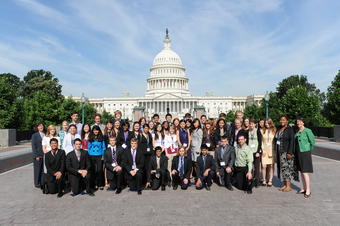 *I had the opportunity last fall to ghost write the background paper for the U.S. Institute of Peace’s Study Guide on “The Impact of New Media on Peacebuilding and Conflict Management.” This will be used for USIP’s annual high school essay contest and can be downloaded at: http://www.usip.org/programs/initiatives/national-peace-essay-contest
To contribute to the USIP study guide I had to get my head around the “big picture” of new media and how it is used to create peace or — more tragically— to foment violence. New media tools can be used for either end, and they are each examined in the guide.
USIP raises also raises the more philosophical question of the degree to which people will move out of comfortable silos to engage (in a civil way) with those who have different views. I would maintain that, to solve the complex global challenges of our time, those dialogues need to take place. The guide touches on some of these deeper questions, but ultimately it prompts students to ask critical questions about how new media tools are being used— and how they could be used—to manage conflicts and build peace.
William Ury’s book, The Third Side, offers a cogent “big picture” of how the Knowledge Revolution has both built bridges and created divides in societies. The information revolution, he suggests, allows destructive behavior to spread more easily across borders: “The more interlinked the worlds tribes become, the more they insist on self-determination.” In the short term, as we struggle to learn to work and live together in more interdependent spaces, conflicts may get worse. And yet, as the Knowledge Revolution makes sharing and cooperating more beneficial and fighting more harmful, we also have the most “promising opportunity in ten thousand years to create a co-culture of coexistence, cooperation, and constructive conflict.” I hope that today’s students and tomorrow’s leaders take this to heart, and understand the role that they can play.
Zarrin Caldwell is a consultant with Global Dreams Consulting. Her website www.modelsofunity.net examines how social media tools can be used to help bridge social capital across traditional divides of race, religion, and ethnicity.